
Key Takeaways
- Golf simulators use real clubs and balls paired with tracking hardware to measure ball speed, spin, launch angle, and carry distance, then calculate the rest of the flight
- Indoor practice offers year-round access, instant feedback, and faster rounds, which matters most when inclement weather makes outdoor sessions tough to plan
- Flat mats and screens cannot reproduce real turf, slopes, wind, or the nerves of a true putt, so some skills only sharpen on an actual course
- Calibration, lighting, and mat quality can all shift how reliable the numbers on screen really are
- Pairing simulator reps with regular course time is the most effective way to turn indoor data into lower scores outdoors
Simulated golf has become a familiar sight across many states, and for good reason. Climate-controlled bays give golfers a way to swing a real club at a real ball without worrying about triple-digit heat or a packed tee sheet. Understanding what these systems actually measure, and where they fall short, helps casual and competitive players alike get more value out of every indoor session.
What A Golf Simulator Actually Measures
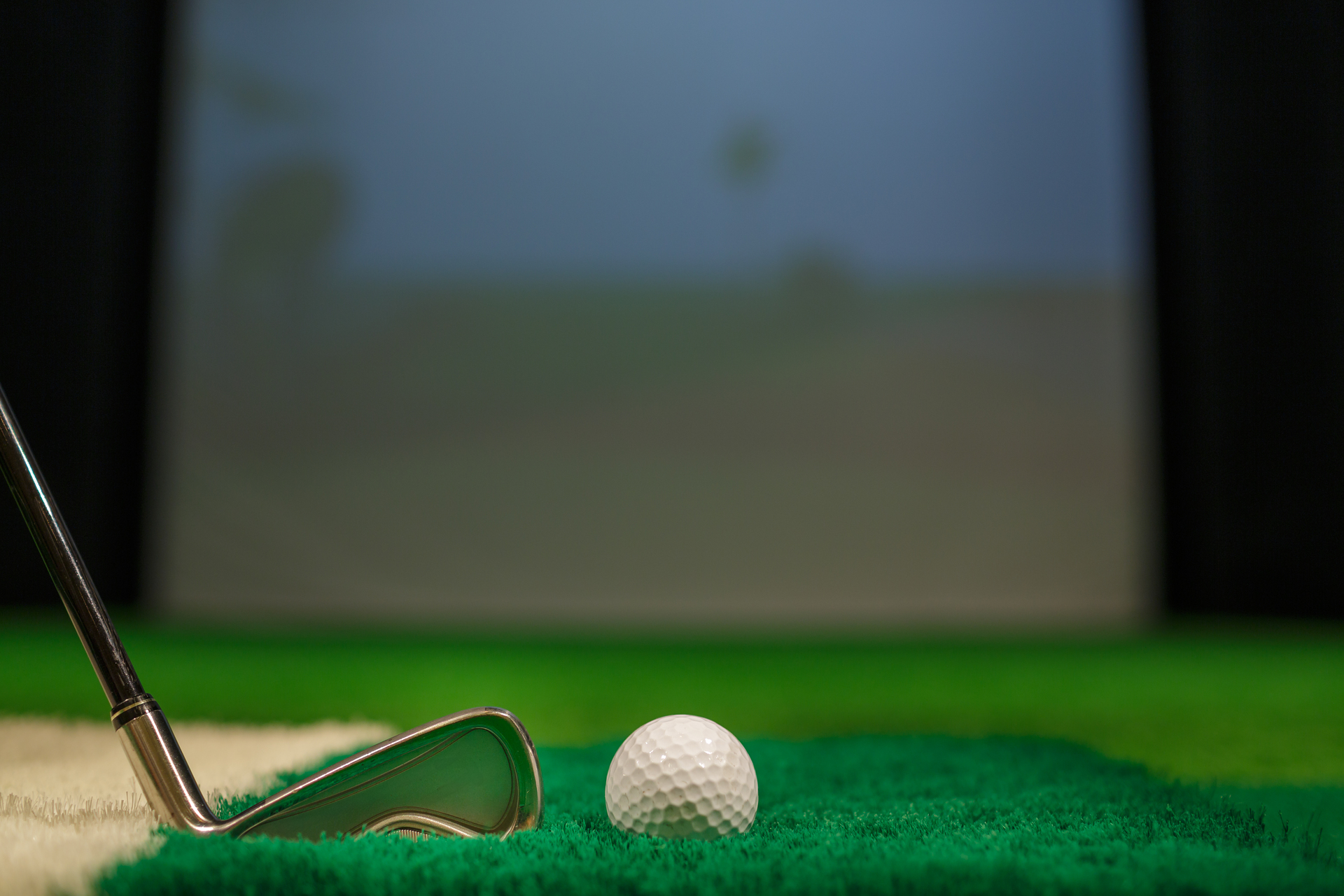
A golf simulator is not a video game guessing at outcomes. It combines tracking hardware, such as infrared sensors, radar, or high-speed cameras, with software that reads a real shot the instant contact happens. A golfer swings a real club at a real ball on a hitting mat, and sensors capture what occurs in that fraction of a second before the ball reaches the screen.
Depending on the system, the data reported can include ball speed, club speed, spin rate, launch angle, club path, carry distance, and shot dispersion. Each of these numbers tells a different part of the story. Ball speed reflects how efficiently the clubface met the ball, while spin rate and launch angle explain why a shot climbs, dives, draws, or fades. Club path and face angle often reveal the root cause behind a persistent slice or push that a golfer might otherwise blame on bad luck.
Once that impact data is captured, the system applies physics-based flight models to calculate where the ball would travel outdoors. That calculated flight then appears on screen, giving golfers a realistic-looking shot shape and distance without ever leaving the building.
Why Indoor Practice Pays Off
Tramonto’s iSwing Indoor Golf says indoor sessions solve a handful of problems that outdoor practice cannot. Weather, daylight, and scheduling all become non-issues once a golfer steps into a simulator bay, which helps explain why this format has grown popular among beginners, recreational players, and competitive golfers checking technical changes alike.
Consistent Access, Any Season
Arizona golfers know the trade-off better than most. Winter mornings are glorious for a round, but summer afternoons routinely climb past 115 degrees, making an outdoor range session miserable or outright unsafe. A climate-controlled simulator removes that variable entirely, letting a golfer practice on a Tuesday evening in July with the same comfort as a January morning. That kind of dependable access matters for anyone trying to build a steady practice habit rather than squeezing in sessions only when conditions cooperate.
Shot Feedback Reveals Swing Patterns
Immediate data turns a guessing game into a diagnostic tool. Instead of wondering why a 7-iron keeps drifting right, a golfer can watch spin and path numbers after every swing and start connecting cause to effect. This kind of feedback loop proves especially useful for testing a specific adjustment, since a player can hit ten balls in a row and see right away whether a change in grip or stance is actually moving the dispersion pattern in the right direction. Recreational players can use the same feedback to spot shot tendencies they might never have noticed on a crowded driving range.
Faster Rounds, No Lost Balls
Time is often the biggest obstacle to playing more golf, and simulators address that directly. A simulated round can move faster than an outdoor round because there is no walking or driving between shots, no searching the rough for a wayward ball, and no waiting on the group ahead. A golfer with a lunch break or a free hour after work can realistically fit in a meaningful practice session or even a short simulated round, something that would be nearly impossible on a full 18-hole course.
What A Screen Can’t Replicate
For all its convenience, a simulator operates inside real limits. The screen and mat can recreate a lot about ball flight, but several core parts of outdoor golf simply do not translate indoors.
Flat Mats Ignore Real Lies And Turf
Every shot on a simulator comes from the same flat, consistent surface. That consistency helps when isolating swing mechanics, but it means a golfer never has to adjust for rough, a downhill lie, a fairway bunker, or hardpan. Outdoors, turf interaction changes how a club interacts with the ball on nearly every shot, and that variability is a skill in itself. A flat mat cannot teach a golfer how to adjust ball position or swing a bit steeper when the lie demands it.
Putting Feel And Gimme Putts
Short game work is where simulators show their biggest gap. Judging putting distance and feel is difficult indoors because a flat screen cannot reproduce green speed, grain, or subtle surface imperfections the way real turf does. Many setups also rely on gimme putts once a ball gets within a certain distance of the hole, since the simulator cannot realistically display anything closer. That convenience makes sense from a technical standpoint, but it also means a golfer gets little practice reading a genuine breaking putt or feeling out lag distance on a true green.
No Wind, Slopes, Or On-Course Pressure
A calculated ball flight on a screen cannot account for a gust of wind pushing a shot offline or a sloped fairway kicking a drive into the rough. These are exactly the variables that separate a good range session from a good round. There is also a mental piece that no simulator reproduces: the pressure of a real shot over water, a tight dogleg, or a putt to save par in front of a playing group. That pressure, along with reading slopes and adjusting for wind, only gets built through repeated time on an actual course.
When Simulator Numbers Mislead Golfers
Simulator data can only be as good as the system producing it. A golfer chasing a swing fix based on inaccurate numbers risks reinforcing the bad habit instead of correcting it.
Calibration, Lighting, And Mat Quality Matter
Calibration, lighting conditions, and the quality of the hitting mat and balls used can all affect how reliable a simulator’s readings really are. A poorly calibrated launch monitor might consistently overstate ball speed or misread spin, which then skews every downstream number, including carry distance and shot shape. Golfers relying on that data to evaluate a swing change could end up making an adjustment based on a flawed signal rather than an actual pattern in their swing. For this reason, a well-maintained, properly calibrated setup is worth seeking out over a system that simply looks impressive on screen.
Calculated Flight Versus Measured Impact
Only part of a simulated shot is actually measured. The sensors capture real data at the moment of impact, but everything after that point, the climb, the descent, the roll, is calculated using flight models that assume certain conditions about wind, turf, and bounce. That distinction matters because real-world factors like altitude, temperature, and actual wind can shift outdoor distances in ways a simulator’s assumptions cannot fully predict. A simulator works best when used to compare distance gaps between clubs rather than to treat any single number as a guaranteed outdoor result.
Blending Simulator Reps With Course Time
The most effective approach treats indoor and outdoor practice as partners rather than substitutes. Elements like start line, face-to-path relationships, full-swing carry gaps, swing speed, and pre-shot routine all transfer well from simulator work, making it a strong place to build and confirm mechanics. Slopes, real turf, actual greens, wind, and physical fatigue over 18 holes do not transfer the same way, which is why course time remains essential.
A practical rhythm might look like using simulator sessions to diagnose a swing issue during the week, then heading to a real course or outdoor range on the weekend to test how that adjustment holds up under actual conditions. Golfers who only ever practice indoors can end up undersupplied in course management and situational shot-making, since those skills depend on reading a lie, judging a green, and adapting to whatever a hole throws at them. Combining both environments closes that gap far more effectively than leaning on either one alone.
Indoor Golf Complements, Never Replaces, The Course
Simulated golf gives players something genuinely valuable: a reliable, comfortable space to swing a club, gather real feedback, and sharpen mechanics no matter what the thermometer says outside. The technology behind a quality setup can turn vague swing frustrations into measurable, fixable patterns, and it does so without the time demands of a full round outdoors.
The honest limitation is that no screen, no matter how advanced, can fully recreate a sloped fairway, a gusty afternoon, or the nerves of a putt that matters. Treating indoor sessions as a training ground rather than a complete replacement for the course keeps expectations realistic and results meaningful. For golfers looking to build a well-rounded game, pairing consistent indoor golf practice in establishments like iSwing Indoor Golf with regular rounds outdoors remains the most reliable path to real improvement.
iSwing Indoor Golf
info@iswinggolf.com
+1-623-440-4036
42101 North 41st Drive,
Suite 124,
Phoenix
Arizona
85086
United States


