
Golden Valley, MN – October 06, 2026 – PRESSADVANTAGE –
Collision Center 1 Golden Valley is publishing consumer guidance that breaks the collision repair process into six stages: damage evaluation, repair planning, parts coordination, body repair, refinishing, and reassembly with final review. The September resource gives drivers a shorter framework for understanding what happens after a damaged vehicle enters the repair process and why an initial repair plan can change as additional information becomes available.
Drivers can find information about the facility through the Collision Center 1 Golden Valley location page.
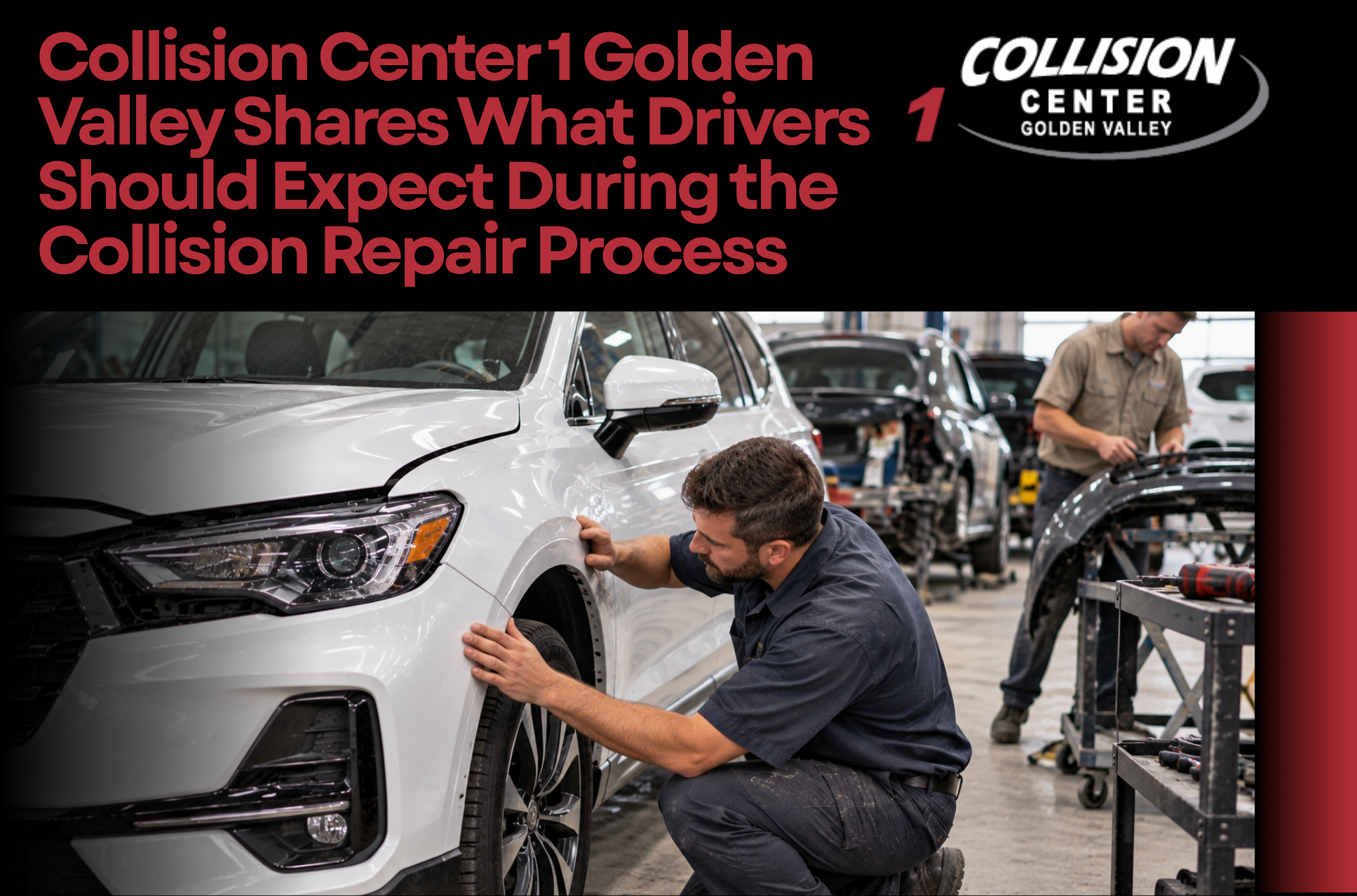
The first stage is damage evaluation. Technicians begin by documenting visible conditions and identifying the primary impact area. A damaged bumper, door, fender, quarter panel, or other exterior component can provide a starting point for determining which surrounding areas should also be evaluated.
The initial inspection reflects what can reasonably be observed at that point. Some attachment areas or adjoining components may be concealed by bumper covers, liners, trim, lamps, or other parts. When additional access is necessary, applicable components can be removed so the affected area can be evaluated more completely.
This leads into repair planning, the second stage. If additional collision-related damage becomes visible during disassembly, the repair plan may be updated to include newly documented parts or operations. These updates are commonly reflected through supplemental documentation.
A revised repair plan does not automatically mean the initial estimate was incorrect. Some conditions cannot be confirmed until technicians have access to areas concealed during the first inspection.
Repair planning also determines whether damaged components can be repaired or require replacement. Factors can include the component involved, its material and condition, the location of the damage, accessibility, and applicable repair procedures.
The third stage is parts coordination. When replacement components are required, those parts need to be identified and sourced before related repair operations can be completed.
Parts availability can affect scheduling, which is why labor hours shown on an estimate do not necessarily equal the number of calendar days a vehicle will remain at a repair facility. When an insurance claim is involved, documentation and claim communication can also affect how the repair progresses.
The fourth stage is the physical repair. Through the collision repair process, damaged exterior components may be repaired or replaced according to the condition of the vehicle and applicable repair information.
Panel fit can be addressed during this stage when the collision has changed the relationship between adjoining components. Structural or mounting areas may also require evaluation when the documented damage indicates that additional inspection or measurement is appropriate.
Vehicle construction can influence how this work is performed. Different vehicles can incorporate steel, high-strength steel, aluminum, plastics, composites, adhesives, welds, rivets, and other joining methods. Applicable manufacturer repair information can therefore become relevant to the individual component and repair.
Vehicle technology can also affect the plan. Cameras, radar equipment, parking sensors, wiring, and other electronic components may be located in collision-prone areas. Their presence does not mean every repair requires scanning or calibration. Any applicable procedures depend on the specific vehicle, affected components, and work performed.
Refinishing is the fifth stage. Once the physical condition of an exterior component has been addressed, repaired or replacement surfaces can be prepared for the appropriate coating system.
Color information provides a starting point for the finish, while the existing appearance of the vehicle and surrounding panels can also be considered. Depending on the repair and finish, blending may be included to create an appropriate transition between newly refinished and existing areas.
This work is part of the broader auto body repair process, rather than a separate cosmetic step. The underlying body repair needs to be completed before the final exterior finish can be evaluated.
The sixth stage combines reassembly and final review. Components removed for access are returned to the vehicle as applicable. Depending on the repair, this can include trim, lamps, moldings, liners, handles, mirrors, bumper components, wiring-related equipment, and other parts.
Quality checks can occur throughout the repair because some areas become concealed after reassembly. Final review provides another opportunity to consider the areas involved in the completed work, including panel relationships, refinished surfaces, reassembled components, and applicable functions.
The September guidance gives drivers one central takeaway: collision repair is a sequence of connected stages rather than a single body-work operation. Evaluation determines what was affected, planning establishes the required work, parts coordination supports that plan, body repair and refinishing address the damaged areas, and reassembly and review complete the process.
Understanding those six stages can also provide context when a repair plan or timeline changes. Additional documented damage, parts availability, claim communication, and vehicle-specific procedures can influence how an individual repair progresses.
Collision Center 1 Golden Valley is located at 900 Florida Ave S, Golden Valley, MN 55426. The facility provides auto body and collision repair services for Golden Valley-area drivers as part of Collision Center 1.
###
For more information about Collision Center 1 Golden Valley, contact the company here:
Collision Center 1 Golden Valley
Jerald Stiele
(763) 541-9727
layres@collisioncenter1.com
900 Florida Ave S, Golden Valley, MN 55426


